Research Portfolio
Media Library
An alternative entry point into the same knowledge architecture as the rest of the portfolio. Media is organized by project rather than by publication date — every recording, lecture, and audio essay belongs to a specific initiative and links directly to its project page. Documents are not treated as media; the library covers video, audio, and recorded presentations only.
All Media
Introductions
Lectures
Technical Briefings
Essays
Audio Books
Interviews
01
Civilizational Security and Resilience
Troy Project→
Mature
View Project Page →
EN
Lecture
Civilizational Sovereignty Clock — 12 Stages of Transparency
A structured walkthrough of the Civilizational Sovereignty Clock model — its twelve stages, the analytical logic connecting them, and the implications for long-term existential risk assessment.
EN
Analytical Lecture
Analytical Model of a Scenario of Latent Technological Penetration
A detailed walkthrough of the latent technological penetration scenario — the structural conditions under which it becomes viable, the observability model, and the institutional implications for governance and military systems.
No essays or audio published — full documentation available in the Project workspace.
02
AI Governance and Strategic Autonomy
Essays & Audio
Evolutionary Intelligence Environment→
Under Discussion
View Project Page →
EN
Series Lecture 1
Beyond Capabilities: Why AI Needs Trust Infrastructure
The first lecture in the EIE series — introducing the core argument that AI systems need trust infrastructure rather than capability evaluation.
EN
Series Lecture 2
Beyond Testing: Why AI Needs an Evolutionary Environment
The second lecture — arguing that static benchmark evaluation is structurally inadequate for systems whose behavior emerges developmentally, and introducing the Evolutionary Intelligence Environment.
EN
Series Lecture 3
The New Paradigm of Intelligent System Safety — From Control over State to Governance of the Developmental Process
The third lecture — articulating the full paradigm shift from state-control to developmental governance.
EN
Series Lecture 4
Beyond Observation: What We Now Need to Learn to See
The fourth lecture — arguing that the emergence of subjecthood in advanced AI systems is a predictable phase transition, and asking what the evaluating environment now needs to learn to see.
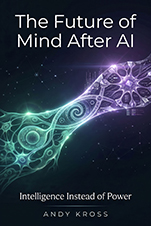
Audio Book — 3 languages
03
Cognitive Development and Human Adaptation
AI and Child Cognitive Development (CFSR)→
Under Discussion
View Project Page →
EN
Lecture
Cognitive Safety: A New Regulatory Category for AI and Child Development
Introduces cognitive safety as a new regulatory category — arguing that existing frameworks are not equipped to evaluate whether an AI system systematically displaces the cognitive processes children need to develop.
EN
Lecture
Cognitive Age: Rethinking Cognitive Maturity in the Age of Intelligent Systems
Introduces the Cognitive Age framework — why chronological age is an inadequate proxy for cognitive readiness in AI environments, and what a genuine measure of cognitive maturity would need to assess.
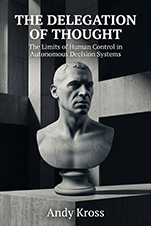
Audio Book — 3 languages
04
Institutional Architecture and Cooperative Systems
The Resilience Architecture Program→
Under Development
View Project Page →
EN
Lecture
The Resilience Architecture: Why “Resilient” Is Not a Property
Introduces the Resilience Architecture framework — arguing that resilience is a structural outcome rather than a property, and presenting the three-dimensional diagnostic model.
EN
Executive Summary
The Resilience Architecture: Why “Resilient” Is Not a Property — Executive Summary
A concise overview of the Resilience Architecture framework for institutional and policy audiences.
Essays & Audio
Cosmic Energy Radiometry Program (CERP)→
Under Development
View Project Page →
EN
Full Lecture · ~30 min
Cosmic Energy Radiometry: Foundations of a New Measurement Discipline
A full TED-style lecture covering the scientific premise of CERP — the measurement gap in cosmic radio flux, the CER energetic radiometer as a new instrument class, the calibration methodology, the information structure analysis layer, and the five-phase program roadmap.
EN
Executive Summary
Cosmic Energy Radiometry: Foundations of a New Measurement Discipline — Executive Summary
A concise institutional overview of the CERP program — its scientific rationale, documentation architecture, and roadmap. For institutional decision-makers, research partners, and funding bodies.
EN
Lecture
How Much Energy Is the Universe Sending Us?
Quantifies the scale of cosmic radiometric flux reaching Earth and what it means for treating that energy as a measurable, information-bearing signal rather than background noise.
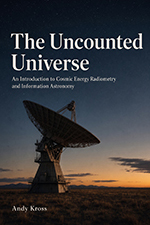
Audio Book — 3 languages
Digital Democracy Framework→
Under Discussion
View Project Page →
EN
Lecture 1
The Crisis of Trust in Institutions: A Problem of Architecture, Not People
Argues that declining trust in institutions is a structural, information-design problem rather than a failure of individual actors.
EN
Lecture 2
From the Democracy of Representation to the Democracy of Verifiability
Traces the shift from representative legitimacy toward a model where legitimacy rests on the ability to verify outcomes directly.
EN
Lecture 3
Voting as an Information System
Reframes voting as an information-processing system and examines where that system’s design produces or erodes trust.
EN
Lecture 4
Non-Falsifiability as the Foundation of Trust
Argues that institutional trust ultimately rests on non-falsifiability — the practical inability to verify claims — rather than genuine accountability.
EN
Lecture 5
Transparency versus Secrecy: The Central Conflict of Digital Democracy
Frames the tension between transparency and secrecy as the defining conflict shaping digital democratic systems.
EN
Lecture 6
Who Benefits from Opacity? The Political Economy of Resistance to Verifiability
Examines which actors and institutions benefit from opacity, and why they resist verifiable systems.
EN
Lecture 7
Can Artificial Intelligence Serve as an Auditor of Public Systems?
Explores whether AI systems can function as independent auditors of public institutions, and what that would require.
EN
Lecture 8
Beyond the Ballot: Platforms of Collective Sense-Making and Real-World Case Studies
Surveys platforms for collective sense-making beyond voting, with case studies of real-world deployments.
EN
Lecture 9
Competition Among Institutions: Why One Model of Democracy Should Not Be the Last
Argues for institutional competition among democratic models rather than settling on a single, final architecture.
EN
Lecture 10
International Standards of Legitimacy and National Sovereignty
Examines the tension between emerging international standards of legitimacy and national sovereignty.
EN
Lecture 11
Digital Democracy and Law: Embedding Verifiability Within Existing Frameworks
Looks at how verifiability principles can be embedded within existing legal and regulatory frameworks.
EN
Lecture 12
Feedback as Civilizational Infrastructure: The Architecture of Verifiability
Presents feedback mechanisms as civilizational infrastructure and outlines the architecture of verifiability.
EN
Lecture 13
The Future of Democracy: From Trust to Verifiability
Concludes the series by mapping the transition from trust-based to verifiability-based democratic legitimacy.
No essays or audio published yet for this project.